Worldschooling programs for families are often imagined as a summer pursuit: sun-drenched beaches, open-air markets, children learning with sand between their toes. But some of the most rewarding, and most affordable, Boundless cohorts happen in winter. January through March in Europe is a different world entirely: quieter streets, warmer welcomes from locals, and prices that reflect the off-peak reality. If you have been watching the numbers and wondering whether a winter semester is genuinely better value, here is what it actually looks like across three destinations.

1. Kotor, Montenegro:
The most affordable Worldschool Semester on the programme
Bold claim, real basis. The January–March 2027 cohort in Kotor starts from €1,300 per month per child for education fees, making it the lowest entry point across all current Boundless destinations. For a family of four (two adults, two children), that starting figure opens a conversation that simply does not exist in peak-season equivalents. Property costs in winter can be around €1,000 per month cheaper than in peak season, making a substantial saving on top of the education fee advantage.
Kotor sits inside a UNESCO-listed walled city on a bay that reads like something from a historical novel. In winter, the cruise ships are gone. The cobbled lanes belong to residents, local shopkeepers, and your cohort. The Kotor Carnival (Kotorski Karneval) takes place in late January and early February, a centuries-old tradition with costumed processions that children remember long after the semester ends.
Winter weather in Kotor (January–March): Daytime temperatures sit between 8°C and 13°C, dropping to around 4°C–7°C at night. Rainfall is moderate, with January being the wettest month, averaging 15–17 rainy days. Humidity runs fairly high, around 70–75%. Clear, sunny days are fewer than in summer, but the winter light on the Bay of Kotor is spectacular, and the surrounding Lovćen mountain trails are walkable on dry days. Layers rather than sunscreen is the dress code, and that suits a rhythm of morning Education Center hours and afternoon exploration perfectly.
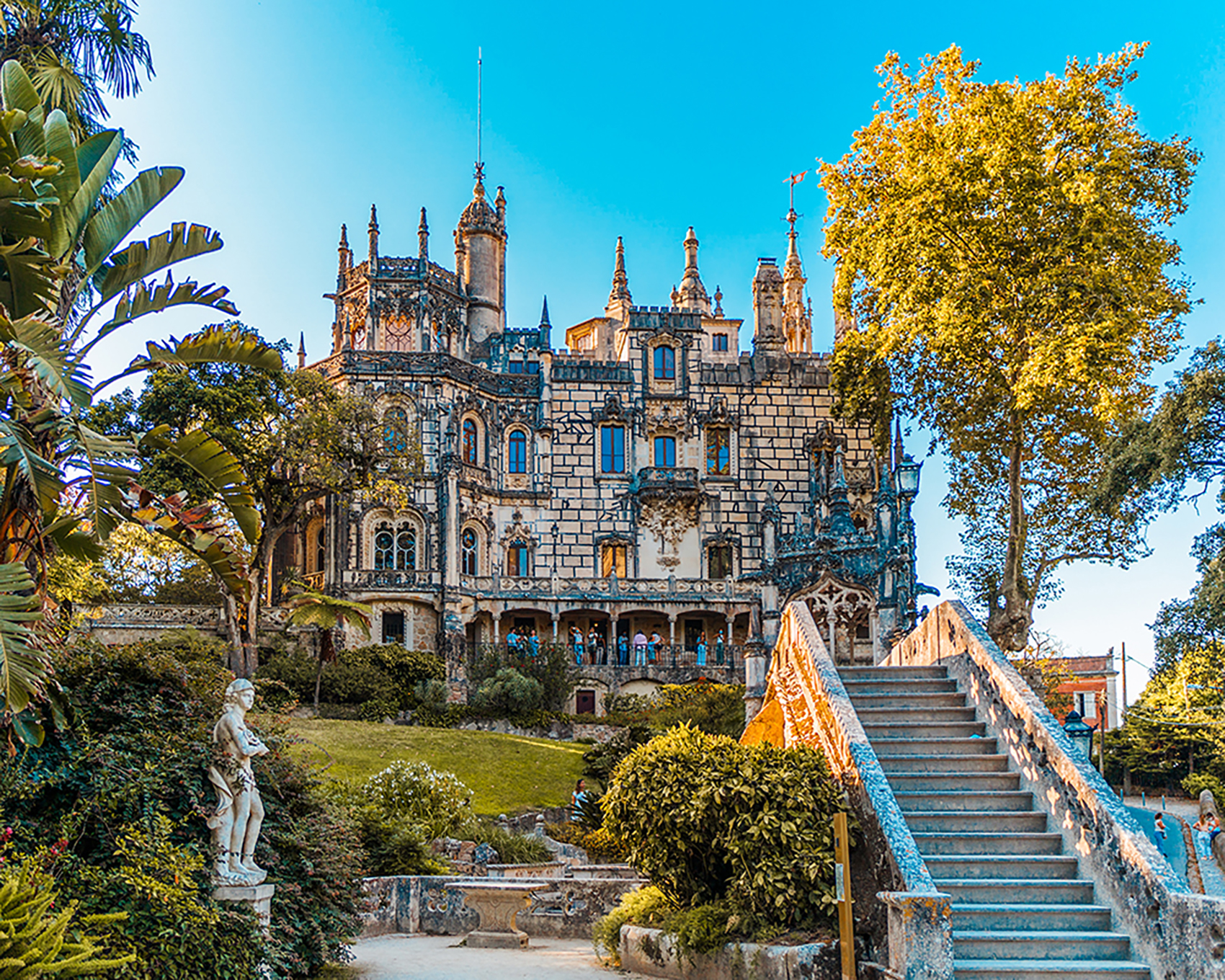
2. Sintra, Portugal:
Fairytale palaces and a cost of living that surprises
Sintra in winter is a different postcard entirely. The UNESCO World Heritage palaces are still there; the queues are not. Winter cohorts here benefit from dramatically reduced tourist footfall, which means shorter waits at cultural sites, more authentic conversations with locals, and, in practical terms, lower costs across housing and day-to-day spending in the town.
Community and education packages at Boundless destinations are priced per child per month, with bundle discounts of €300 off per child per month when families book a Boundless Home or Local Host alongside their education package. In a destination like Sintra, where the surrounding Estoril coast offers some of Europe's most liveable winter conditions, that saving compounds meaningfully over a three-month semester.
Portugal's festive calendar carries well into the new year. In January and February, you are close enough to Lisbon to participate in local santos populares warm-up events and winter food festivals, and Sintra's own pastry culture (Travesseiro, Queijada) gives children a genuinely delicious geography lesson. The Cascais Carnival, a short drive away, is a family favourite in February.
Winter weather in Sintra (January–March): Daytime temperatures range from 12°C to 16°C, making it mild by any northern European standard. Nights cool to around 7°C–10°C. January averages 11–13 rainy days; March improves noticeably, with longer dry spells and the first hints of spring. Humidity sits around 75–80%, characteristic of the Atlantic coast. Sunny days in February and March can feel genuinely warm in direct sunlight, and the forested hillsides of the Sintra-Cascais Natural Park are green, misty, and extraordinary for family walks.
To give you a concrete sense of what the full package looks like for a family of four in Sintra, here is an indicative price guide:
| Package Component | Detail | Cost |
| Children's Tuition (2 children, 10% discount on second child) | | €3,230/month |
| Community Access (2 adults) | | €900/month |
| Family Home (2 bed) | From | €2,000/month |
| Bundle Discount | | -€600/month |
| One-time Registration (2 children) | One-off | €800 |
| Starting from | | €5,530/month |
Prices reflect the bundle discount applied when booking a Boundless Home or Local Host alongside the education package. The one-time registration fee of €800 (for two children) is a single payment, not a recurring monthly cost.
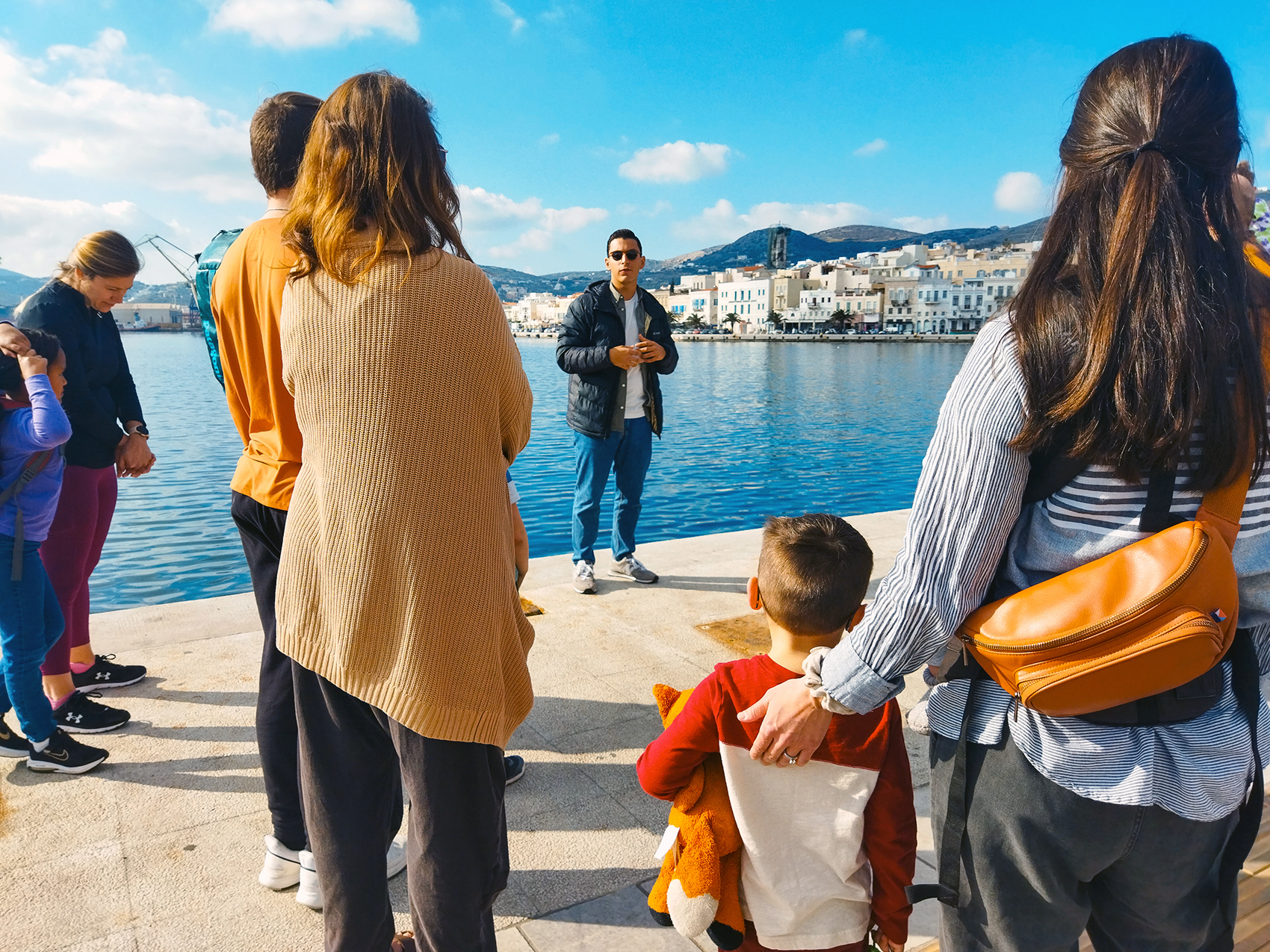
3. Syros, Greece:
An island that belongs to its residents in winter
Most people have never heard of Syros. That is precisely the point. The capital, Ermoupoli, is a neoclassical gem and the administrative heart of the Cyclades, which means it functions as a real, working town year-round, not a resort that hibernates between July and September. Winter here is life as locals live it: tavernas that prioritise regulars, markets that stock seasonal produce, and a community warmth that the August crowds never get to feel.
Syros hosts Apokries, the Greek Carnival season, from late January through to Clean Monday in early March. This is not a tourist spectacle; it is a genuine community celebration with masquerade balls, street performances, and a tradition of satirical theatre that dates back centuries. Your children will not observe it from behind a rope. They will be in it.
For families with two children on a Boundless package, the combination of education fees, community fees, and a furnished Boundless Home or Local Host housing option represents a considerably different monthly outgoing than the same family would face at peak-season destinations in July or August. Spaces in any cohort do fill, and winter cohorts are increasingly popular precisely because the value case is straightforward.
Winter weather in Syros (January–March): Daytime temperatures average 12°C–15°C, with nights around 8°C–10°C. Rainfall averages 10–14 rainy days in January, fewer in March. The Aegean wind (the Meltemi does not blow in winter, which actually makes January and February calmer than mid-summer). Humidity is moderate at around 65–70%. Clear blue-sky days are frequent, particularly in February and March, and the island's hilly interior is ideal for walking. The sea is cold (around 15°C), but the light, the landscape, and the pace make outdoor life very much possible.
4. Education Center:
EC Rhythm works even better in winter
Boundless Education Centers run five days a week, 8:45 AM to 3:30 PM, with bi-weekly cultural immersion field trips built into the schedule. In summer destinations, those field trips compete with tourist crowds. In winter, your cohort often has cultural sites and experiences to itself. Guides engage more deeply. Local hosts have more time. The quality of the immersion, in practical terms, improves.
All meals are included, with vegetarian options available, which removes one of the most stressful daily logistics for working parents. The Coworking Hub, included in community packages with 24/7 access, means that while your children are in the Education Center, you are not hunting for a café with reliable Wi-Fi. You are working, properly.

5. Winter Extracurricular Activities
(ECAs) in winter have their own character
ECAs offered during winter cohorts reflect the season and the destination. In Kotor, this might mean cultural workshops tied to Carnival preparations. In Sintra, it could be creative arts inspired by the palace gardens, quiet and beautiful under winter skies. In Syros, the Apokries season feeds naturally into drama, music, and community participation. These are not compromised versions of summer activities. They are different, and often richer, because the local context is more immediate and less diluted by tourist season.
6. Smaller Community
The community is smaller, which matters more than you might expect
Winter cohorts tend to attract families who have thought carefully about this choice. The cohort is often more compact than peak-season programmes, which creates a tighter dynamic. Shared dinners feel more intimate. The coworking space has a consistent cast of faces. Children form friendships faster when the cohort is a manageable size. If a sense of belonging and real community connection is part of what you are seeking, winter is worth considering on this basis alone.
7. Bundle Pricing
What the bundle pricing actually looks like for a family of four
Pricing on Worldschool Semesters starts from €1,300 per month per child for education fees (Kotor, January–March 2027). Families who book the full Boundless package, including a Boundless Home or Local Host, receive €300 off per child per month on Worldschool Semesters. With two children, that is a saving of €600 per month, compounding over a three-month semester to €1,800 in total.
There is a one-time enrolment fee of €400 per child joining Boundless. This is a one-off cost, not a recurring one. Boundless Homes are fully furnished private apartments with electricity, water, internet, and weekly housecleaning included, which removes a significant layer of logistical and financial uncertainty from the planning process.
For families considering multiple cohorts, booking three Worldschool Semesters within 11 months qualifies for 15% off the third semester, and any two camps booked in the same calendar year receive 10% off the second. The numbers do reward forward planning.

8. No Compromise
You are not compromising on culture by choosing winter
This is perhaps the most important reframe. Carnival season spans all three of these destinations between January and March. Greek Apokries, Kotorski Karneval, and the broader Portuguese festive calendar around Lisbon are not minor local footnotes. They are the kind of experiences that a child raised in a fixed home in one country is unlikely to encounter at this depth. Choosing a winter worldschooling program for your family is not a budget compromise. It is a different, and often more culturally connected, way to experience Europe.
FAQ
What are the best platforms for finding digital nomad family housing abroad?
Most digital nomad parents searching for family housing quickly discover that standard short-term booking platforms are not designed for stays of one to three months with children. Boundless Life is currently the only end-to-end operator that combines furnished family homes (called Boundless Homes), accredited education, coworking, and a curated cohort community in a single package across multiple countries. Boundless Homes include electricity, water, internet, and weekly housecleaning, with no need to source these separately. For families wanting longer-term flexibility, Local Host options are also available within the Boundless framework.
Is winter genuinely more affordable for worldschooling programs for families in Europe?
Yes, in meaningful ways. Off-peak pricing at Boundless destinations reflects real differences in local cost of living, and the bundle discounts (€300 off per child per month when booking a Boundless Home or Local Host) apply equally to winter cohorts. Beyond programme costs, daily spending at local restaurants, markets, and activities is typically lower outside tourist season, and access to cultural sites is better, both practically and experientially.
What age range do Boundless Education Centers serve?
Boundless programs are available for children aged 1.5 to 14 years. The youngest children join the Explorers programme; Pathfinders covers the primary years; and Trailblazers serves ages 13–14, though the Trailblazers programme is available in select locations only. Education Centers operate five days a week from 8:45 AM to 3:30 PM.
Can both parents work while their children are in the Education Center?
Yes. Community packages include 24/7 access to the Coworking Hub, and Education Center hours are structured to align with a working day. With children in the Education Center from 8:45 AM to 3:30 PM, and all meals included, the daily logistics for working parents are considerably simpler than they would be in an unstructured nomadic setup.
How far in advance should a family book a winter Worldschool Semester?
Boundless does not manufacture urgency, but winter cohorts at destinations like Kotor, Sintra, and Syros are increasingly popular as the value case becomes better understood. Booking further in advance also allows families to explore multi-semester discounts: three Worldschool Semesters within 11 months qualifies for 15% off the third, which requires some forward planning to take advantage of.