Here's How to Tell the Difference Between Caution and Evidence
Fear of changing your child's education is not a warning that you're about to make a mistake. For most parents standing at the edge of worldschooling programs for families, that fear is simply what responsible parenting feels like when you're about to make a choice you were never taught to consider. The question worth asking isn't how to make the fear disappear. It's how to stop letting fear outrank what you already know.
If you've been circling this decision, reading everything, imagining it all, and still can't move, this article is for you.
Why the Fear Feels So Much Like Wisdom
Most parents don't stay inside a conventional education system because they've weighed every option and decided it's unquestionably the best one. They stay because it's the path they know. It comes with familiar milestones, familiar language, and familiar proof that everything is going according to plan.
So when you start imagining something different, fear shows up fast. What if my child falls behind? What if they lose their friends? What if I can't give them everything they need?
Those aren't foolish questions. They come from love, and from understanding that the choices you make for your children matter. But fear has a real limitation: it's very good at detecting uncertainty, and not always good at determining what's actually right. It tends to treat the unfamiliar as dangerous and the familiar as safe, even when the familiar has stopped working.
A child can be unhappy in a familiar system. Disconnected. Slowly losing confidence. And because the system is recognizable, you can convince yourself that staying is the responsible decision. That is why fear can feel so much like wisdom. It speaks in the voice of caution. It tells you to wait until the plan is perfect, until everyone agrees, until you feel ready.
But readiness is often something you understand only after you've begun.
Four Shifts That Help You Move
Shift One: Separate Fear From Evidence
Fear deserves to be heard. It simply doesn't deserve to be the only voice in the room. When fear takes over, it speaks in predictions. Your child will fall behind. They'll lose their friendships. You'll make the wrong call.
Predictions are not the same thing as evidence.
When fear appears, ask yourself two questions. First: what is this fear assuming? Second: what evidence do I actually have?
Maybe the fear assumes that leaving a traditional school will automatically harm your child's learning. But the evidence might be that your child has already stopped asking questions, dreads Monday mornings, and comes home exhausted from holding themselves together all day.
Maybe the fear assumes your child will lose their friends. But the evidence might be that they already feel lonely in a room full of children their own age.
Evidence doesn't eliminate uncertainty. But it allows fear to sit beside what you already know, instead of speaking over it.
Shift Two: Stop Trying to Solve the Next Ten Years
Parents often become paralyzed because changing direction feels like designing their child's entire future all at once. The perfect curriculum, the perfect location, the perfect answer to every question someone might ask.
You don't need to solve the next ten years. You need to decide what you're willing to explore next.
That might be one month of learning differently. One extended trip. One conversation with a family already living the kind of life you're considering. Small steps are not less courageous. They're often what courage looks like in real life.
Shift Three: Treat the Next Step as an Experiment
Many education decisions feel terrifying because we treat them like final verdicts. We believe that once we choose something, we have to prove we were right forever.
But families aren't static. Children change, parents change, circumstances change. A decision can be right for one season without needing to become the answer for every season that follows.
Instead of asking what if this is the wrong decision, try asking: what are we hoping to learn from trying this? Name the experiment. Decide how long you'll run it. Choose what you'll pay attention to. Then give yourself permission to adapt. That doesn't make you indecisive. It makes you responsive.
Shift Four: Let Action Build the Confidence
We tend to believe that confidence should come first. Once I feel ready, I'll begin. Once I know it'll work, I'll take the risk.
But confidence rarely arrives before experience. It grows because of experience. You take one step. You notice what happens. You solve a problem you didn't know how to solve before. You watch your child respond. You learn that you can change direction without everything falling apart.
The confidence you've been waiting for may not be available on this side of the decision. It may be waiting for you after the first step.
What This Looks Like for a Real Family
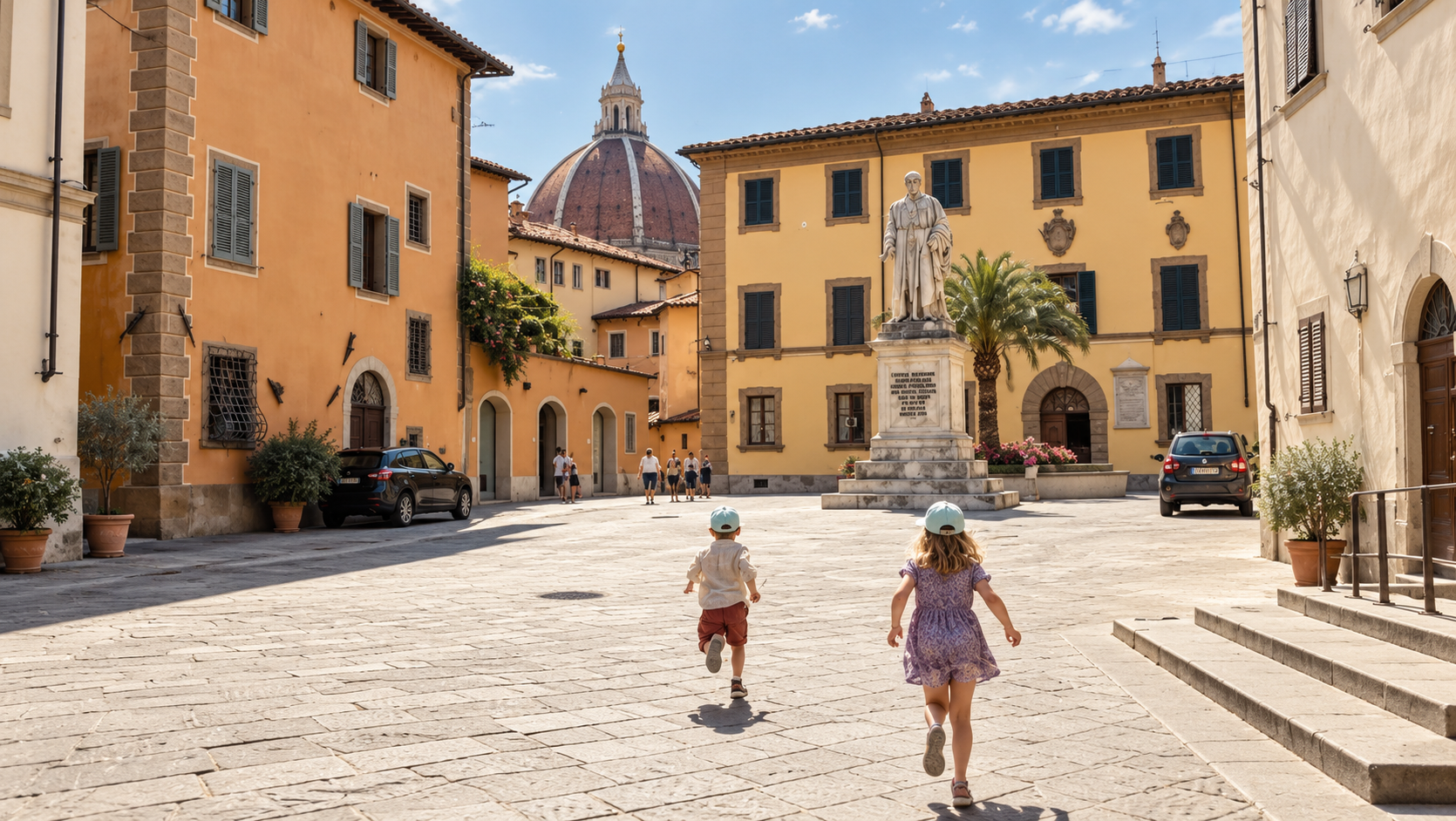
When Alejandra and Morgan began considering worldschooling programs for families, their situation was genuinely complicated. Morgan ran a chiropractic clinic in Toronto. Their work, their home, their relationships, and their routines were all rooted there.
Their first plan involved Morgan flying back to Toronto every two weeks while Alejandra stayed with their children in Sintra, Portugal. It wasn't a tidy plan. It came with travel, separation, expenses, and plenty of uncertainty. It was not the kind of plan that makes you feel completely ready before you begin.
But they didn't need the perfect plan. They needed a first version.
Once they arrived in Sintra, they began noticing changes they couldn't have predicted from back home. Mornings that had felt rushed and pressured in Toronto became slower walks through the small Portuguese town. Their children began heading toward the Education Center with motivation instead of resistance. The family had more time together. More space to talk, more space to notice one another, more space to breathe.
Not every logistical challenge disappeared. But something important had shifted, and they now had evidence. Not imagined evidence. Not someone else's opinion. Evidence from their own family, in their own lives.
That first step didn't answer every question. It gave them better questions. And sometimes, that's what beginning is for.
The Fear Flip: A Simple Three-Step Framework
You don't need to make fear disappear. You need to make it workable. Here's how.
Step One: Name the Fear
Write down the three fears that appear most often when you imagine changing something about your child's education. Don't judge them. Don't try to talk yourself out of them. A fear you refuse to name can quietly control the entire decision. A fear written on paper becomes something you can actually examine.
Step Two: Turn the Fear Into a Design Question
Take each fear and change the words what if into how will we.
- What if my child falls behind becomes how will we notice whether our child is continuing to learn and grow?
- What if they lose their friends becomes how will we protect existing friendships and create opportunities for new ones?
- What if this doesn't work becomes how will we decide whether to continue, adapt, or choose something else?
The moment you reframe fear as a question, it stops being a wall and becomes a problem you can begin designing around.
Step Three: Create One Small Test
Choose one of your design questions and build a small experiment around it. If you're worried about friendships, plan one month where your child joins a new community while staying intentionally connected to two close friends. If you're worried about learning, design a six-week project and observe how your child reads, researches, communicates, and solves problems through it. Decide what you're testing, how long you'll test it for, and when you'll review what you learned.
The goal isn't to prove your fear was irrational. The goal is to stop letting it make the decision without being questioned.
FAQ: Worldschooling Challenges and How to Overcome Them
What are the main challenges of worldschooling and how do you overcome them?
The most common challenges are fear of academic gaps, social disconnection, logistics, and the pressure of making a permanent-feeling decision. The most effective way through all of them is the same: separate what you fear from what you actually observe in your child, start with a short experiment rather than a lifetime commitment, and look for programs that handle the infrastructure, education, housing, and community for you. Worldschooling programs for families like Boundless Life are built specifically to reduce logistical overwhelm while keeping education structured and consistent.
Will my child fall behind academically if we leave a traditional school?
This is the fear that almost every family names first, and it's worth examining closely. Ask yourself what evidence you have that your child is thriving academically right now. Many families find that a structured, curiosity-driven education, like the Finnish-inspired approach at Boundless Education, keeps children engaged in ways a conventional learning environment doesn't. Boundless Life states that its curriculum follows a child through every destination with one consistent portfolio and zero gaps.
How do children make and keep friends while worldschooling?
The cohort model that programs like Boundless Life use is designed specifically to solve this. Families travel and live alongside a community of like-minded families, meaning children build genuine friendships with peers who are sharing the same experience. With more than 1,500 families in the Boundless community, connection isn't left to chance.
How do I know when to trust my instincts over my fear?
A useful test: is your fear speaking in predictions (things that might happen) or in evidence (things you're already observing in your child)? If your child is curious, engaged, and thriving, caution is appropriate. If your child is slowly becoming less of themselves, that's evidence, and evidence deserves to outrank a prediction.
Do I have to plan everything before I start?
No. In fact, trying to plan everything is often what keeps families stuck. Start with the smallest possible step: one conversation, one month, one cohort. Programs like Boundless Life's four-week getaway option exist precisely for families who want to test a different rhythm before committing to a longer Worldschool Semester. You can build confidence and clarity from that first step, not before it.
You Don't Have to Be Fearless
The fear you feel doesn't mean you're unready, irresponsible, or about to make a terrible mistake. It may simply mean you've arrived at a threshold that every thoughtful parent reaches when they begin questioning the path they were handed.
You don't need to cross that threshold without fear. You just need to stop letting fear outrank what you already know about your child.
If you're ready to explore what worldschooling programs for families look like in practice, Boundless Life brings together accredited education, furnished family homes, coworking, and a community of families who've already taken that first step. Discover where your family's next chapter could begin at boundless.life.