

Kotor, Montenegro with kids works because everything sits close together. Home, the Education Centre, the grocery store, the mountains, and the bay are all within a few minutes of each other on foot. Two families who spent a full cohort here describe the same thing in different words: a place where daily life gets simpler and the weekends get bigger.
Kotor is a walled medieval town on the Bay of Kotor, the only fjord in the Mediterranean and a UNESCO World Heritage Site. Montenegro also sits outside the Schengen Area, which turns out to matter enormously for families planning more than three months in Europe. More on that further down.
What follows comes mostly from two families, in their own words.
Landing Softly in a New Country
Sarah Boyle's family arrived for Kotor's very first cohort, with a one-year-old and a three-year-old, having just sold their home in the UK.
That is a lot of uncertainty to carry through an airport. Her account of what happened next is short and specific: "Immediately upon arriving in Kotor we felt at ease."
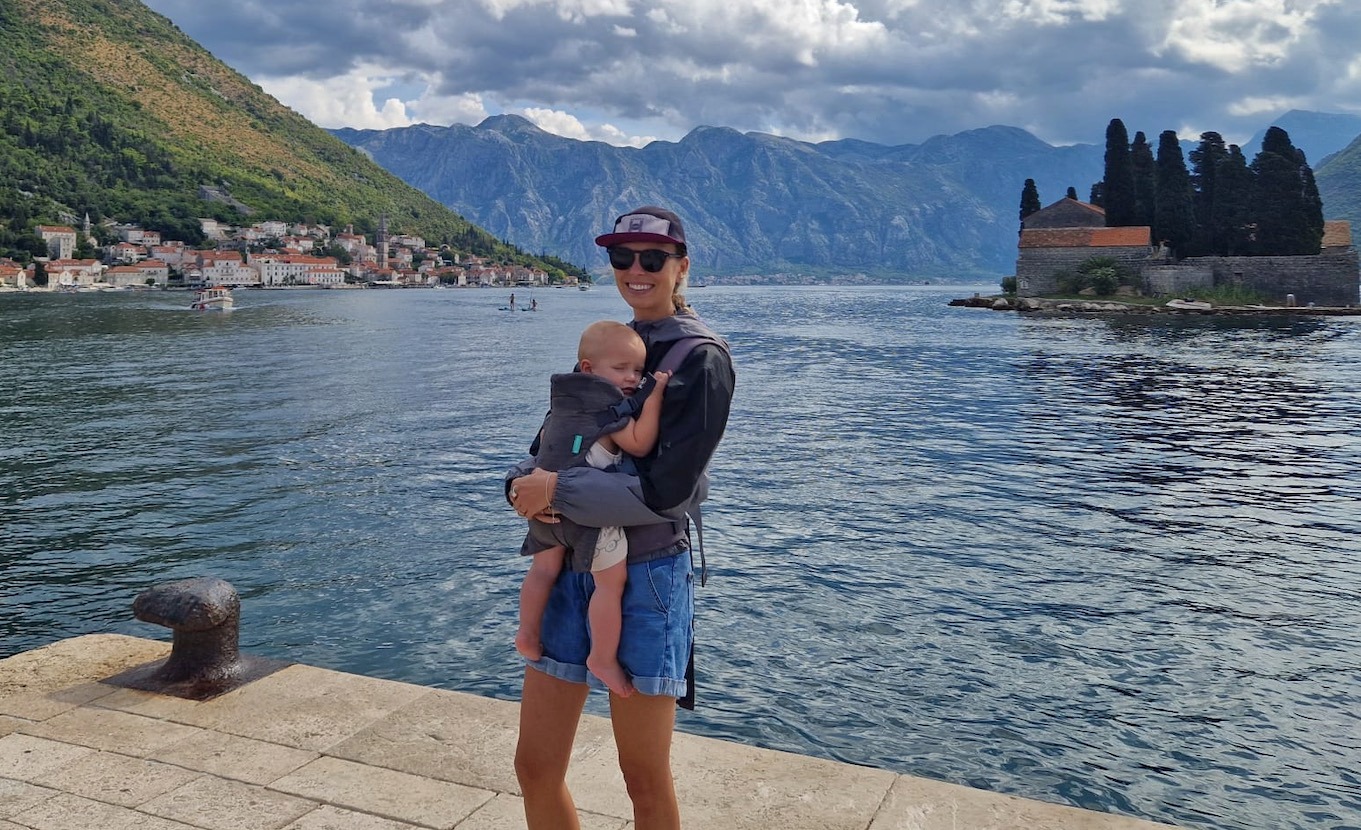
The first test for any family with small children is the handover at the school door. Sarah found it went better than she expected. "The school facilities were thoughtfully designed and the teachers were so warm to our three-year-old. He had instant friends in them."
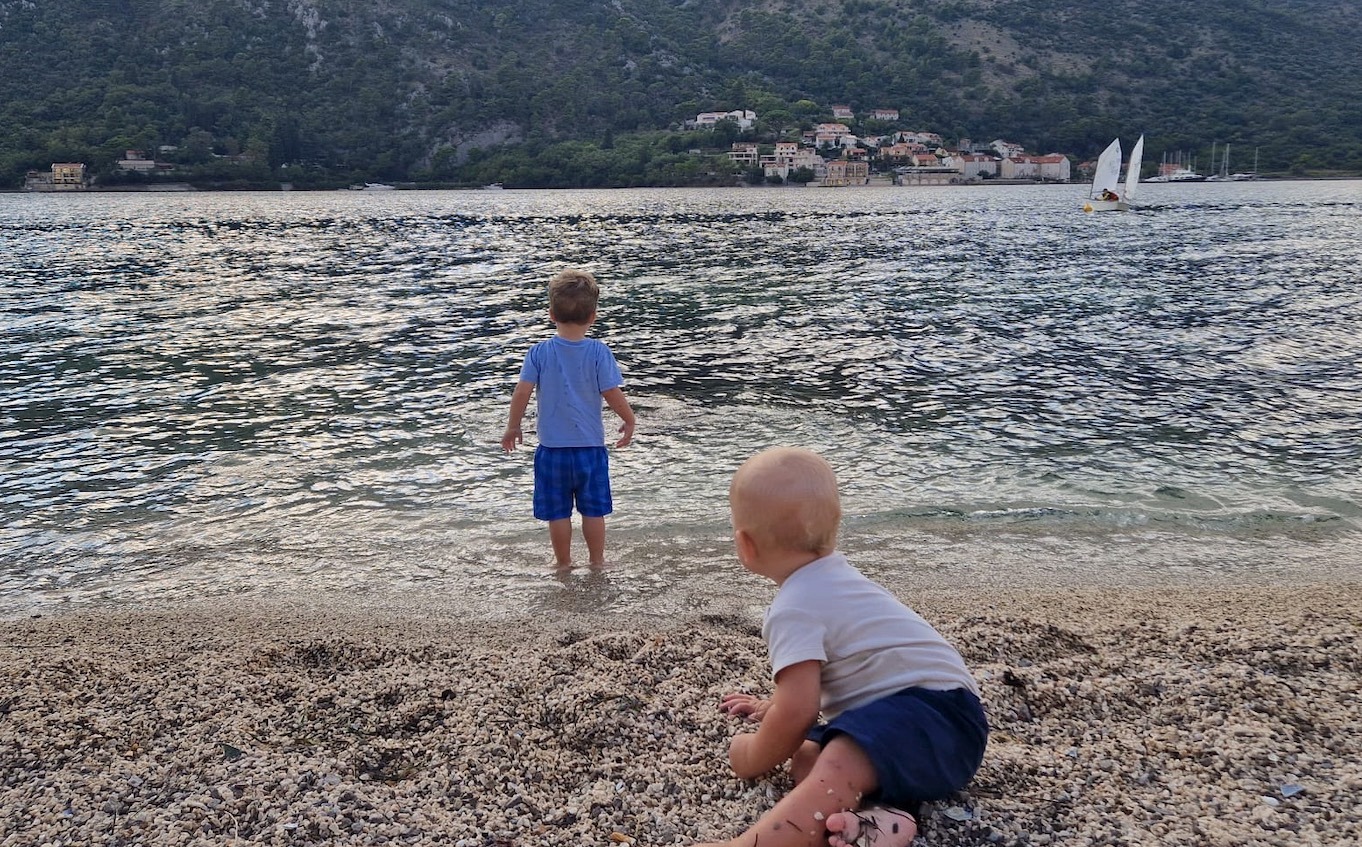
The second test is the one parents rarely mention out loud, which is whether anyone here will understand what you have just done with your life. On that, Sarah is direct. Her family "met families who understood us without any explanation," and they have already reconnected with several of them in Greece and Bali since.
That is the quiet advantage of arriving somewhere as part of a cohort rather than alone. You skip the explaining.
Explore how the learning day is structured at Boundless Education.
Walking Your Kids to School Past a Medieval Fortress
Ty Davis is American, and he keeps circling back to how strange it felt to say where he lived.
"The ability to say that you live in or near a medieval fortress," he said, is "something as an American that you'd never grow up even thinking, let alone uttering those words."
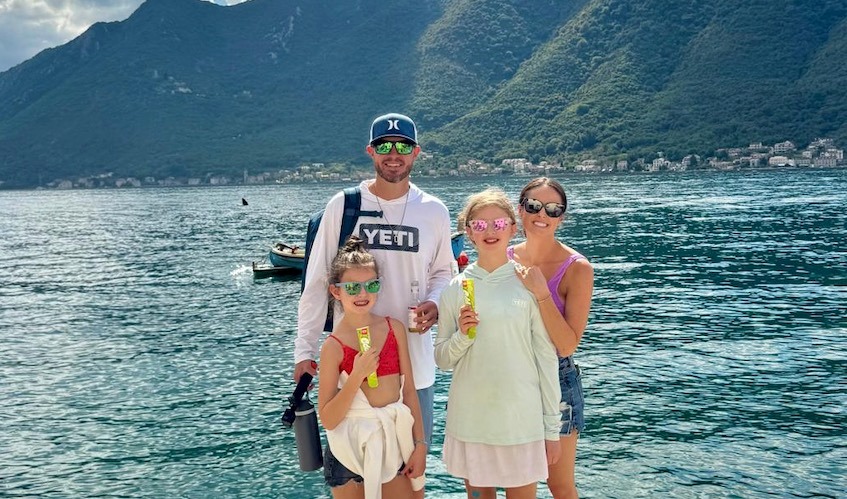
The fortress in question is the Castle of San Giovanni, reached by a zigzagging staircase trail that starts near the Old Town walls. It is not a day trip. It is the thing at the end of your street. Ty describes the ordinary version of it: dropping the girls at school, then walking around the fortress, hiking to the top, and looking "down into the town that you call home."
This is the part that surprises most families. In Kotor the school run and the sightseeing are the same walk. The Old Town is walkable, the streets are cobbled and closed to cars, and the trail up the hill begins minutes from the gate.
Stepping Straight Into the Mountains and the Bay
Sarah described something that will be familiar to anyone who has moved countries with young children, which is the mental checklist that will not switch off.
"I would be thinking about our move and going through life admin checklists in my mind," she said, "and would look up to see a stunning mountain face just illuminated in sunlight and just stop in my tracks."
Kotor does that. The mountains rise almost vertically from the water, so the landscape is never at the edge of your vision. It is directly overhead. As Sarah put it, "you truly are surrounded by unbelievable scenery and able to hike up into the mountains every day if you want to."
The practical version: kayaking on the bay, paddleboarding along the coast, boat trips to Our Lady of the Rocks, biking the promenade, and swimming off the shoreline in summer. Marko Kordic, who runs experiences locally, described his approach simply: "I'm trying to use the good weather as much as I can to be outside, to show people the nature."
Riding the Cable Car in Two Different Seasons
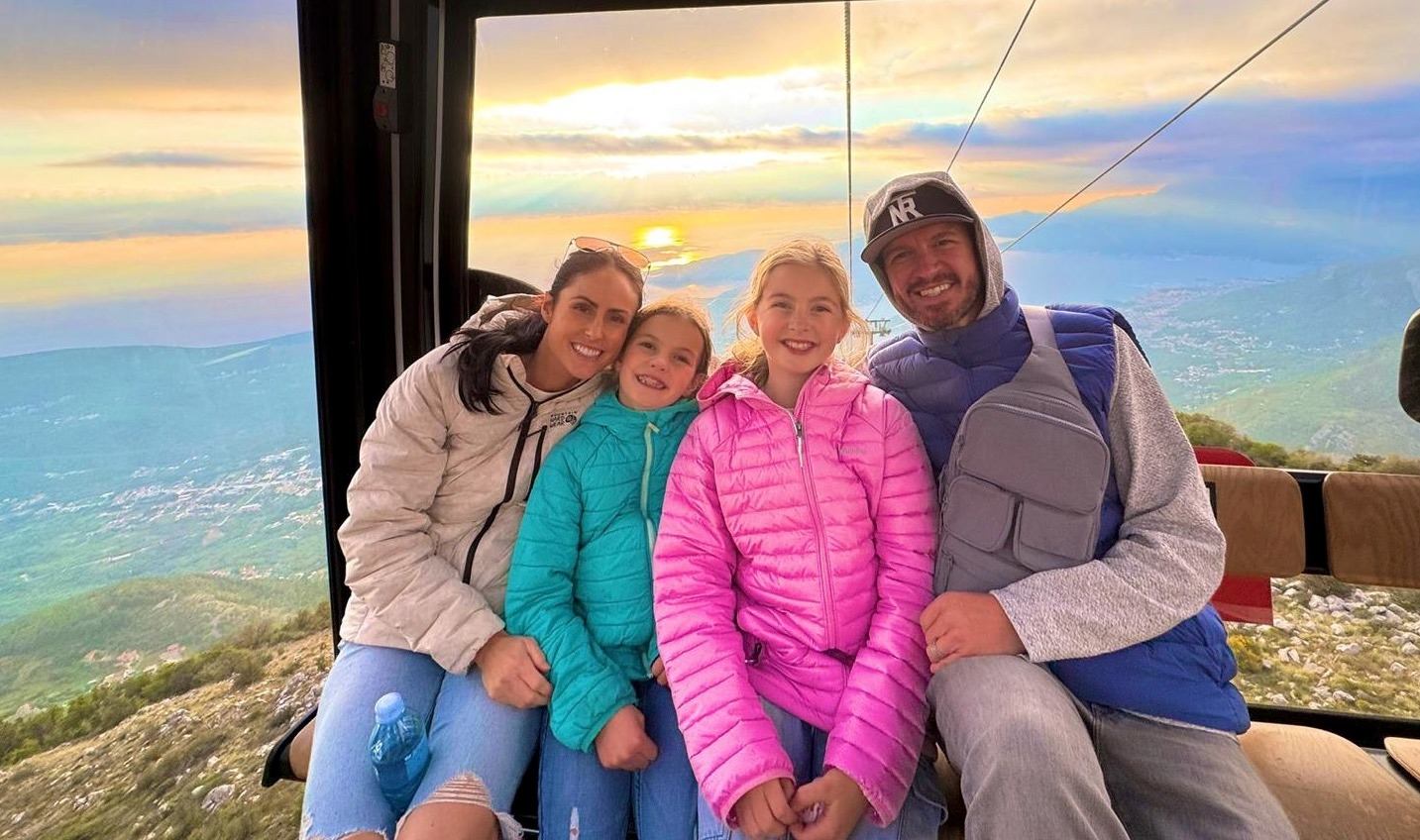
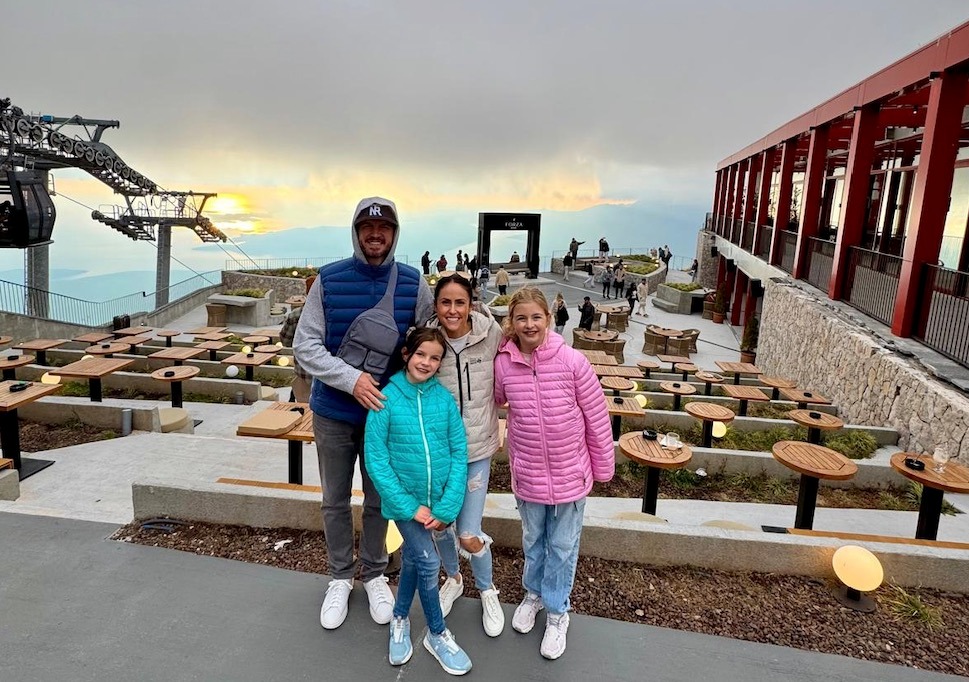
Ty's family took the Kotor cable car twice, once in early October and once in late November, and he talks about them as two separate experiences.
In October the trees had not turned, it was still hot, and the bay was bright blue in the sun. By late November everything had changed color, the air was cold, and the top was sitting in fog. Same ride, same family, completely different day.
His tip is worth stealing. Most visitors stop at the first restaurant at the top station. Ty's family walked past it to the back, where they found a wood-fired pizza place with a live DJ. "And the view was insane." Small detail, but it is the kind of thing you only learn by living somewhere for three months instead of visiting for three days.
Taking the Weekend to Durmitor and the Blue Cave
Montenegro is small enough to cross and varied enough that crossing it feels like changing countries.
Ty's family took a bus north to Žabljak, in Durmitor National Park, and stayed in chalets with the rest of the community, barbecuing together the first night. The next morning they rode ATVs through the mountains for two hours and finished at a crater lake.
He is still not over it. The water was "still to this day the bluest, coolest water I've ever seen." The approach is what made it, because you cannot see the lake until you are on top of it. "As soon as you crested over the top you just looked down into this insane blue water."
They swam, ate a catered lunch by the water, rode back, then watched the F1 together over another grill out. His verdict: "That was one of my favorite days on this planet."
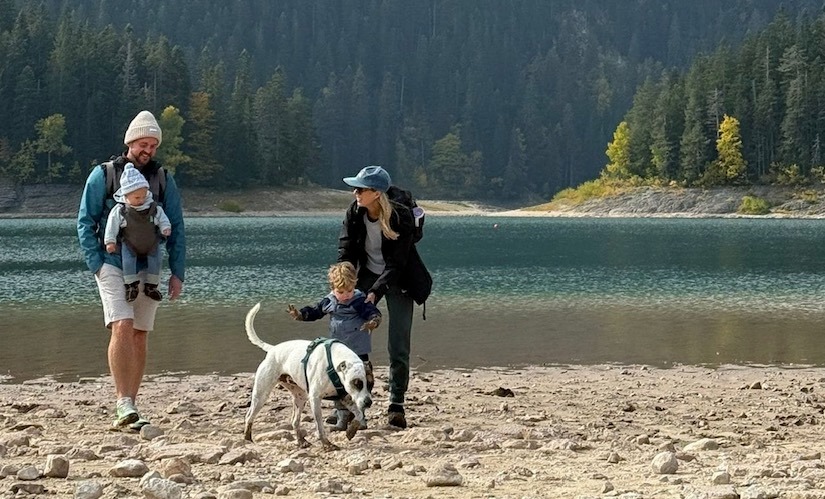
Sarah's family drove to the same national park, and her memory of it is smaller and just as durable. Her boys saw the fall colors and played in the snow together for the first time. Her three-year-old, she says, "still talks about that experience."
Closer to home, Ty's family took the boat out to the Blue Cave, stopping at Perast on the way, where a church sits on a man-made island in the middle of the bay. For his family, that stop mattered on faith grounds as much as scenery.
Within roughly three hours of Kotor you can also reach Dubrovnik, Lovćen National Park, Skadar Lake, Tara Canyon, and the wine route around Trebinje. The full travel guide to Kotor maps out what sits within each drive time.
Finding a Community That Forms Overnight
Both families independently landed on the same subject, which says something.
Ty's family lived in Scurda, the building that houses Boundless Homes above the Education Centre. He describes "the ability to live right above where the girls went to school" as symbolic of the whole year. Then he gets concrete about what community actually looked like in practice: "everyone's sharing salt and sharing pepper and throwing spatulas up and down the stairwell."
That is a more honest picture of instant friendship than any brochure line. Doors open, kids move between apartments, and you borrow things.
Sarah's version involves the local Crew, two men both named Marko. "Marko and Marko just made us feel like family," she said. When her family could not make a parents' dinner, Marko brought the meal to their home.
The story she tells to make the point is better. Her partner Kenny parked in a police zone while getting a haircut, without his passport or visa papers on him, and came close to being arrested. Marko talked the officer down over the phone.
Her conclusion travels well beyond Montenegro: "it's incredible what a difference it makes to have a local person looking out for you when you're making mistakes in a new country."
Kids find their footing on a similar timeline. Friendships form in the Education Centre, continue after hours in the stairwell, and carry on across destinations. Sarah's family has already met their Kotor friends again in two other countries.
Read more about how the Boundless community works at each destination.
Choosing Your Season in Kotor
Kotor is a year-round destination, but it is a genuinely different place in each cohort. Here is how the seasons compare for families with young children.
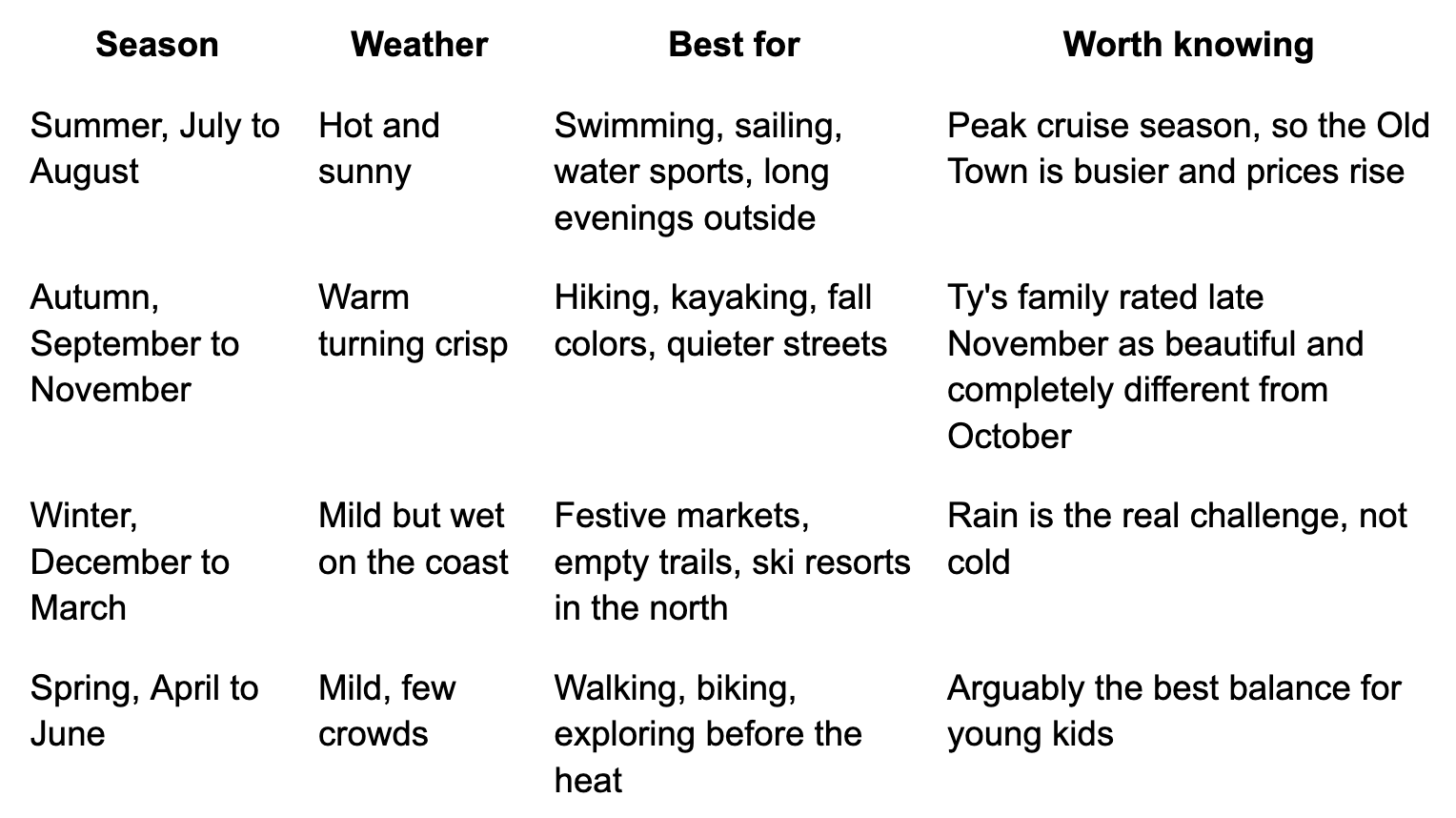
Marko Kordic is honest about the winter trade-off, noting that winters do not get too cold but rain can be the challenge, which opens up the ski resorts in the north of the country instead.
For a closer look at the autumn cohort, including field trips and extracurriculars like sailing, pottery, and guitar, see Kotor in the Fall.
Unlocking a Full Year in Europe From Outside Schengen
Here is the strategic reason families choose Kotor specifically, and it has nothing to do with scenery.
Montenegro is not in the Schengen Area. Most Schengen countries allow visitors 90 days within any rolling 180-day period, and that limit applies across the whole zone rather than country by country. Ninety days in Italy does not reset by crossing into Greece.
Time spent in Montenegro does not count toward that allowance. Many passport holders, including US, UK, Canadian, and Australian citizens, can stay in Montenegro visa-free for up to 90 days on top of their Schengen days.
That single fact is what makes a full academic year in Europe workable. It is why the Worldschool Year offers a single-visa Year in Europe route, running Sintra to Kotor to Tuscany, with Kotor sitting in the middle as the pause that protects your Schengen allowance.
You also stay well connected while you are there. Tivat Airport is 15 minutes away, Dubrovnik is about 90 minutes by road, and Podgorica is a similar drive with better year-round flight options. Weekend trips into Schengen countries stay possible throughout.
The full explanation of how Kotor unlocks longer stays covers the details, and immigration rules do change, so confirm current requirements for your passport before you book.
Frequently Asked Questions
Is Kotor good for families with toddlers and preschoolers
Yes. Sarah Boyle arrived with a one-year-old and a three-year-old and found the Education Centre warm and well designed for the youngest children. The Old Town is pedestrianized, distances are short, and home, school, and groceries sit within a few minutes' walk of each other, which matters more than anything else when you are traveling with a stroller.
Is Montenegro in the Schengen Area
No. Montenegro sits outside the Schengen Area, and many nationalities can stay up to 90 days visa-free without using Schengen days. That is what allows families to build a full academic year in Europe. Montenegro also uses the euro, so day-to-day spending stays familiar.
Is Kotor safe for children
Kotor consistently ranks among Montenegro's safest towns, with a low crime rate and a walkable, compact center. Both families describe kids moving freely between apartments and around the Old Town. Check your government's current travel advice before you travel.
What is the best time of year to be in Kotor with kids
Spring and autumn offer the best balance of mild weather, open trails, and smaller crowds. Summer is best for swimming and sailing but coincides with cruise season. Winter is mild and quiet on the coast, with rain the main drawback and ski resorts a few hours north.
How do kids make friends when the family moves every few months
Through the cohort. Children start in the Education Centre, keep going in the shared building afterward, and stay in touch across destinations. Sarah Boyle's family has already reconnected with friends from their Kotor cohort in both Greece and Bali.
Start Your Kotor Chapter
Kotor gives you a medieval town at the foot of a mountain, a bay you can kayak before dinner, a school run that goes past a fortress, and neighbors who pass spatulas up the stairwell.
Sarah Boyle summed up her family's cohort this way: Kotor "gave us so much comfort, community, and outdoor adventure at a time in our lives when we really needed it."
Explore Kotor, Montenegro and see which cohort fits your family's year.


.avif)

