

Visa and immigration details last verified: August 26, 2026. Portuguese immigration law changed substantially in October 2025 and again in May 2026. Confirm your situation with a licensed Portuguese immigration lawyer before you commit money or dates.
More U.S. families are choosing Portugal than ever, and the reasons are practical as much as they are poetic. Lower costs, a slower pace, excellent public infrastructure, and a culture that genuinely welcomes children are pulling thousands of families east across the Atlantic. This guide covers the visa routes as they actually stand in 2026, a realistic timeline, honest costs, and how a worldschooling program can take the hardest parts of arrival off your plate.
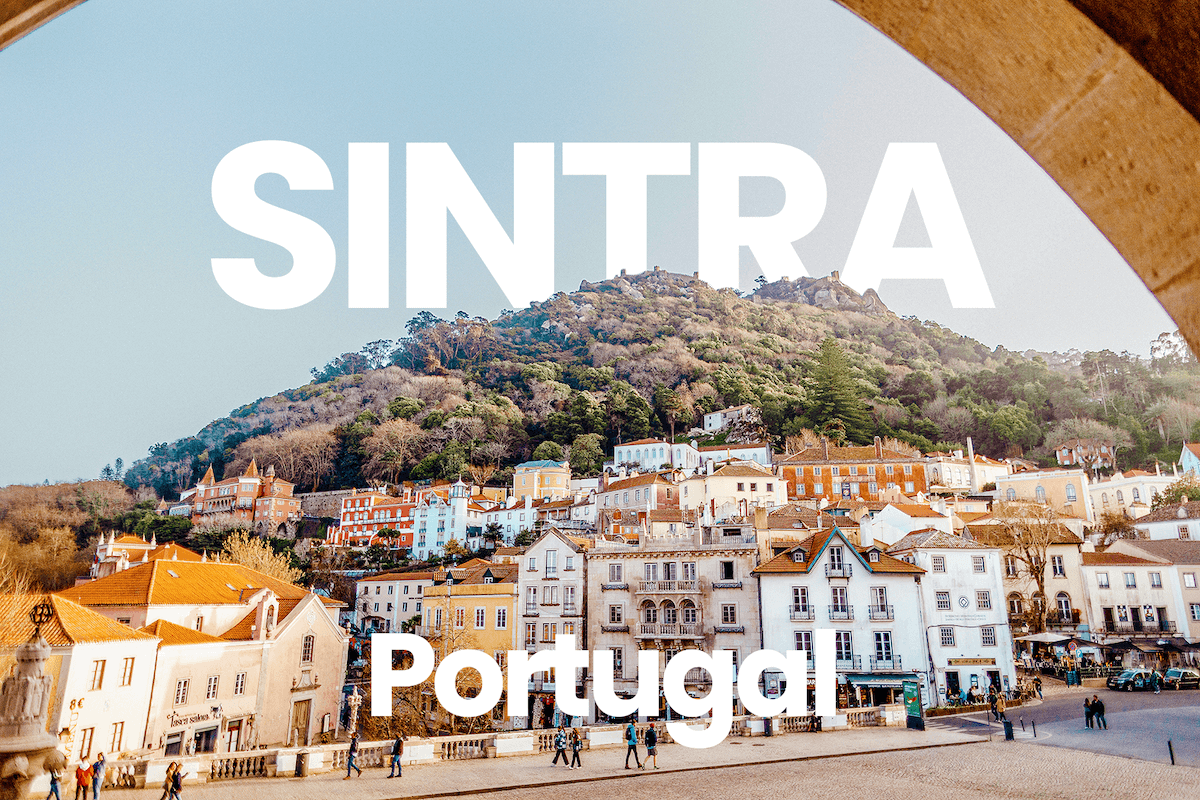
Sintra deserves a longer look. Thirty minutes from Lisbon, tucked into forested hills dotted with painted palaces, it offers the kind of life most families spend years imagining. It's also a Boundless Life flagship destination.
Why Portugal Keeps Coming Up
Since 2020, something has shifted. Remote work became permanent for many households, costs climbed across U.S. cities, and a growing conversation about the quality of family life pushed a wave of parents to ask a simple question: does it have to be this hard?
Portugal answers on several fronts:
- Cost of living. Groceries, eating out, and day-to-day spending run well below major U.S. cities. Families arriving from New York, San Francisco, Austin, or Los Angeles routinely stretch a dollar much further.
- Healthcare. Once you hold a residence permit, you can register with the Serviço Nacional de Saúde. Your visa application will still require private health insurance, and private family cover costs a fraction of equivalent U.S. premiums.
- Education. State schools are free for resident children. International and bilingual private schools cluster around Lisbon.
- Safety. Portugal ranks consistently among the most peaceful countries in Europe on global indices, and families notice the difference in daily life, particularly for children.
- Culture. Portuguese society is famously child-friendly. Restaurants welcome children late into the evening. Public space is built around family use.
- Climate. Mild Atlantic winters in the Lisbon region, long bright summers, and a coast that stays walkable year-round.
Popular landing zones include Lisbon for city infrastructure, Porto for a smaller-city feel and a thriving arts scene, the Algarve for coast and pace, and the Sintra–Cascais corridor, which combines natural beauty, fast access to Lisbon's international airport, and a deeply established international community.
Step 1: Choose Your Visa Route
Two laws changed the landscape recently, and both matter more than anything else on this page.
Law 61/2025 took effect on October 23, 2025. It requires you to hold the correct visa before you enter Portugal, and it introduced a two-year residence requirement before you can sponsor family members who are still abroad.
Organic Law 1/2026 took effect on May 19, 2026. It raised the residence period required for citizenship from five years to ten for most nationalities, and to seven for EU and Portuguese-speaking-country nationals. Permanent residency is untouched at five years.
If you have read an older guide promising Portuguese citizenship in five years, set it aside.
D8 Digital Nomad Visa
Introduced in 2022, the D8 is the route most remote-working parents will use. You earn from outside Portugal, you meet an income threshold pegged to the Portuguese minimum wage, and you apply from the U.S.
Income. The threshold is four times the national minimum wage. Decree-Law 139/2025 set the 2026 minimum wage at €920 from January 1, which puts the main applicant at €3,680 per month. Add 50 percent for a spouse or partner and 30 percent for each dependent child. A family of two adults and one child needs roughly €4,416 per month; two children, roughly €4,692.
Savings. You also show "proof of substance" of at least twelve times the monthly minimum wage, around €11,040 for a single applicant, increasing for each family member.
Pick the right version. The D8 comes in two forms, and choosing wrong is an expensive mistake. The temporary stay visa runs one year and does not renew. The residency visa leads to a renewable two-year residence permit and a long-term pathway. If you are relocating rather than sampling, you want the residency visa.
Where it leads. Permanent residency after five years of legal residence. Citizenship after ten years for U.S. nationals, counted from the date your first residence card is issued, not from the date you applied.
D7 Passive Income Visa
Built for reliable passive income: pensions, dividends, royalties, rental income. The threshold is lower, at least €920 per month for the main applicant, with the same family uplifts. For retirees and families living off an investment portfolio, it is often the cleaner file.
Golden Visa
Restructured in 2023 and narrower than its reputation suggests. Both the real estate route and the capital transfer route are closed. What remains:
- €500,000 into a qualifying CMVM-regulated venture capital or private equity fund, with no real estate exposure
- €500,000 into scientific research
- €250,000 into artistic production or national cultural heritage, reduced to €200,000 in designated low-density areas
- €500,000 into a Portuguese company plus five permanent jobs
- Direct creation of ten jobs, reduced to eight in low-density areas
The appeal is the presence requirement: seven days in Portugal in year one, fourteen days in subsequent years. It is more complex, more expensive, and requires legal and financial advice. The ten-year citizenship clock applies here too.

Bringing Your Family: Read This Twice
This is the detail that catches families out, and it deserves more attention than any other line in this guide.
Include your spouse and children in your original consular application. Do this and your family applies together, is assessed together, and travels together once the visa is granted.
Miss that window and Law 61/2025 applies: a D7, D8, or investor permit holder must complete two full years of legal residence before filing to bring family members who are still abroad. The clock runs from the date your residence permit was issued, not from your visa or your first entry. Two years is a long time to be a household split across an ocean.
Family members who arrive through reunification also carry integration duties that affect permit renewal, including Portuguese language training and a course on constitutional values, alongside compulsory schooling for children.
Documents Take Longer Than You Think
Every route requires apostilled documents: birth certificates, marriage certificates, and criminal background checks. An FBI background check takes roughly two to three weeks, and apostilling it adds around five weeks on top. Start here, before anything else.
Step 2: Map a Realistic Timeline
Two stages, not one. The consulate decides your visa while you are still in the U.S. Then AIMA, the immigration agency that replaced SEF in 2023, issues your residence card after you arrive. Most guides skip the second stage. It is the longer one.
Budget twelve to eighteen months from first decision to residence card in hand.
12–15 months out — Research and decide.Visit if you can. Scout the Lisbon and Sintra region. Speak to at least one licensed Portuguese immigration lawyer. Start pulling documents.
10–12 months out — Legal and financial groundwork.Engage your lawyer. Start the apostille process. Get Portuguese NIF numbers, which you can do remotely through a fiscal representative. Open a Portuguese or European bank account if you can.
8–10 months out — Book your appointment, then apply.In the United States, most applications go through VFS Global centers, which collect your documents and biometrics and forward the file to the consulate. Appointment waits in 2026 have run seven to eight weeks in New York at the optimistic end, two to three months in Washington D.C., San Francisco, and Houston, with Miami consistently slowest.
One thing worth knowing: applicants who file directly at the Portuguese consulates in Boston, Newark, and New Bedford have reported faster approvals than those routed through VFS centers. If your consular jurisdiction allows a choice, ask your lawyer about it.
The consulate is meant to decide a complete application within about sixty days. In practice, decisions commonly land at two to four months, and some D8 files in 2026 have run six to nine months. An incomplete file restarts the clock.
4–6 months out — Housing and schooling.Secure housing. Furnished long-term rentals in the Sintra–Cascais corridor are competitive, especially at three bedrooms and above. Investigate schooling. The Portuguese academic year runs September to June.
1–3 months out — Logistics.Ship or sell. Manage healthcare transitions. Notify your banks, insurers, and the IRS regarding FBAR obligations. Arrange temporary housing for arrival if your permanent home isn't locked.
On arrival — The AIMA stage.Check your visa paperwork first. D-series visas often arrive with a pre-scheduled AIMA appointment attached, and families waste weeks hunting for a slot they already hold.
If you don't have one, plan for a wait. Three to six months between arrival and appointment is common in 2026, and some AIMA delegations have scheduled first-time biometric appointments twelve to eighteen months out. AIMA has cleared genuine volume, issuing 386,000 residence permits in 2025, a 60% increase on the prior year, but tens of thousands of files remain actively pending.
Two practical notes. Since April 2025, AIMA rejects any application that is incomplete at submission, so one missing document means starting over. And you can request an atestado de residência, an official declaration that your residence application is pending, which banks, utilities, and Segurança Social will accept while you wait.
This gap between landing and holding your card is real, and it is the most underestimated part of moving to Portugal. It is also exactly the window a cohort is built to carry you through.
Step 3: Budget for Your First Year
Orientation figures only. Costs vary with family size, lifestyle, and location.
- Housing near Sintra: a furnished three-bedroom apartment typically runs €1,500 to €2,800 per month
- Private international schooling: roughly €500 to €1,500 per child per month
- Groceries: a family of four might spend €600 to €900 per month
- Dining out: a family dinner at a mid-range Sintra restaurant, €40 to €70
- Private health insurance: family policies often €150 to €400 per month
- Government visa fees: roughly €120 to €150 per applicant, combining the consular fee and the VFS service fee
- Legal fees: budget €1,500 to €4,000 for a full-family application
Many families arriving from high-cost U.S. cities find that even with private schooling, their total monthly outlay drops.
Step 4: Land in Sintra
Not every Portuguese location suits a family making its first move. Sintra earns its reputation.
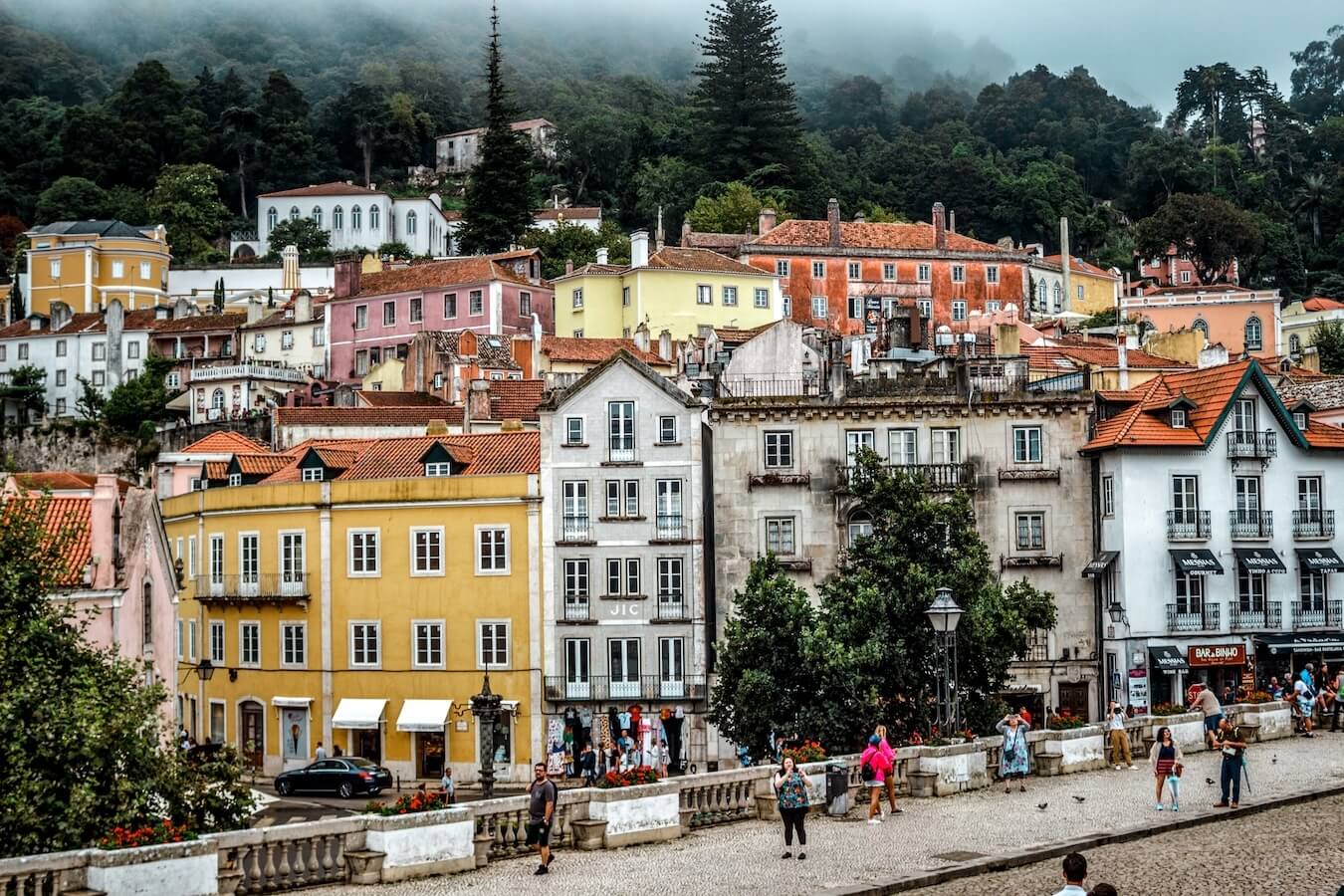
The town sits inside a UNESCO World Heritage cultural landscape, wrapped in the Serra de Sintra hills. Moorish castles, the improbable pink towers of Pena Palace, and pine-scented forest trails are the backdrop to an ordinary Tuesday. The infrastructure is quietly excellent: rail links reach Lisbon in around forty minutes, which keeps the city fully available for work, appointments, or a late dinner. The community blends a well-established international population with a strong Portuguese identity and a food scene that punches far above the town's size.
For families, Sintra offers safe streets, open parks, and a scale that makes it genuinely livable rather than merely photogenic.
Step 5: Use a Worldschooling Program to Land Softly
Relocating a family internationally is logistically demanding. Housing, education, workspace, community, and routine all have to arrive at once. Families who do it independently often spend months in planning chaos before anything feels settled.
Boundless Life takes that coordination off your plate. Education, furnished homes, workspace, and a curated community arrive as one package, in cohorts, alongside other families doing exactly what you're doing. Sintra is one of the flagship destinations, and it's where the Boundless Life story started.
Option A: Start With a Summer Camp
Not ready to commit to a full relocation? A Boundless Life Summer Camp in Sintra lets your family live like locals for a month.
Your children join the Education Center, open five days a week from 8:45AM to 3:30PM, available for children aged 1.5 to 14, with bi-weekly cultural immersion field trips during Education Center hours. All meals are included, with vegetarian options. You get 24/7 access to the Coworking Hub, a local community manager, weekly wellness activities, welcome and farewell events, and airport transfers. Your family lives in a Boundless Home: a fully furnished and equipped private apartment with electricity, water, internet, and weekly housecleaning included.
It's the lowest-risk way to test whether Portugal, and Sintra specifically, is the life you want. Just watch the calendar: as a U.S. passport holder, you can spend 90 days in any 180 in the Schengen area without a visa, and since the Entry/Exit System became fully operational across Schengen on April 10, 2026, entries and exits are recorded biometrically rather than stamped. Overstays are now caught automatically. A separate authorization called ETIAS is coming for visa-free travelers, but it isn't live yet and the EU has not confirmed a start date, so a passport is still all you need today.
Option B: Commit to a Worldschool Semester
A three-month Worldschool Semester is where the shift happens.
Your family arrives into a cohort that's already forming. Your children learn at the Education Center through Boundless Education, a learning system inspired by the world-renowned Finnish model and built around experiential, differentiated, purposeful, and interdisciplinary learning, with mindful well-being running through all of it. Days move through Connection Time, Mastery Time, Quest Time built on the UN Sustainable Development Goals, Nature Time, and Cultural Immersion Time.
You work from the Coworking Hub. Your home is furnished and equipped. And you are not decoding a new country alone, which is the part families consistently say mattered most.
Boundless Life has been named to Fast Company's Most Innovative Companies of 2026 in Travel and Hospitality, recognized for providing turnkey educational and coworking communities for families travelling for extended periods, and was featured at SXSW EDU.
Step 6: Build Your Network Before You Arrive
The families who thrive are rarely the ones who moved with the most money or the most spreadsheets. They're the ones who arrived with people.
Portugal has a deep infrastructure of expat groups, Lisbon-area parent communities, and worldschooling networks. Tap into them early, and ask specific questions. Which lawyer did you use? Which notary? Which neighborhood for a family of four with a dog? Which AIMA delegation is actually moving?
Join a Boundless Life cohort and that network exists from day one.
Frequently Asked Questions
How do I find safe, furnished family homes for a long stay abroad?
The hardest part is finding a property that's genuinely family-appropriate, available beyond a holiday let, and in a neighborhood that works for daily life. Around Sintra, well-furnished three-bedroom properties move fast. Boundless Homes remove the search: fully furnished and equipped private apartments with electricity, water, internet, and weekly housecleaning included, plus kitchen amenities, linens, towels, and children's amenities, secured as part of your cohort booking. They're designed for families on long stays, not tourists.
Do my children need to speak Portuguese to join a Worldschool Semester in Sintra?
No. The Education Center operates in English, with cultural immersion and local language exposure woven into field trips and daily life. Portuguese becomes a natural part of living in Sintra rather than a prerequisite for arriving.
Can I do a Worldschool Semester while my Portuguese visa is processing?
A Portuguese tourist visa allows you to stay in Portugal and the wider Schengen Area for a maximum of 90 days within any 180-day period.
For longer term, you must apply for a D7 or D8 from a Portuguese consulate or VFS center in the United States, and since 2024 you must hold the correct visa before you enter Portugal to live there. You cannot arrive first and regularize afterward.
What a cohort can do is give you a real look at the country before you commit. As a U.S. passport holder, you can spend up to 90 days in any 180-day period in the Schengen area visa-free, which comfortably covers a Summer Camp and, with careful counting, a Semester. Families use that time to meet lawyers, scout neighborhoods, and understand which AIMA delegation they'll be dealing with, then file from the U.S. with real information behind them.
Boundless Life is not a legal or immigration service and cannot advise on visa eligibility. Always work with a licensed Portuguese immigration lawyer on your specific situation.
How long until we can apply for Portuguese citizenship?
Under the nationality law that took effect on May 19, 2026, U.S. nationals need ten years of legal residence, counted from the date your first residence card is issued. EU and Portuguese-speaking-country nationals need seven. Permanent residency is a different and much closer milestone, available after five years of legal residence. Applications filed on or before May 18, 2026 continue under the previous five-year rule.
What ages does Boundless Life cater to in Sintra?
The Education Center is available for children aged 1.5 to 14, across Explorers, Pathfinders, and Trailblazers. Trailblazers classrooms, for ages 13 to 14, are only available in select locations, so check the current Sintra cohort page for the dates you're considering.
Is a Summer Camp enough to know whether we want to relocate?
For most families, yes. A month in Sintra, living in a Boundless Home, working from the Coworking Hub, watching your children settle into the Education Center, tells you more than six months of research. You experience the pace, the school run, the weekend markets, and the community. You go home knowing rather than wondering.
Explore Sintra
The families already in Sintra didn't wait for the perfect moment. They picked a cohort, sorted the logistics, and showed up.
Boundless Life exists to make that first step straightforward: homes ready, education sorted, workspace open, community waiting. Browse current Sintra cohort dates at boundless.life/sintra-portugal Spaces in each cohort are limited and they fill ahead of schedule.


.avif)

